Know Your Risk. Protect Your Life.

KNOW YOUR RISK

KNOW YOUR RISK

Understanding your personal risk for blood clots is one of the most important steps you can take to protect your health—and your life. Blood clots can affect anyone, but certain conditions, situations, and lifestyle factors can significantly increase risk.

Below are some of the most common risk factors for blood clots. Knowing your risk empowers you to take action and seek care early.

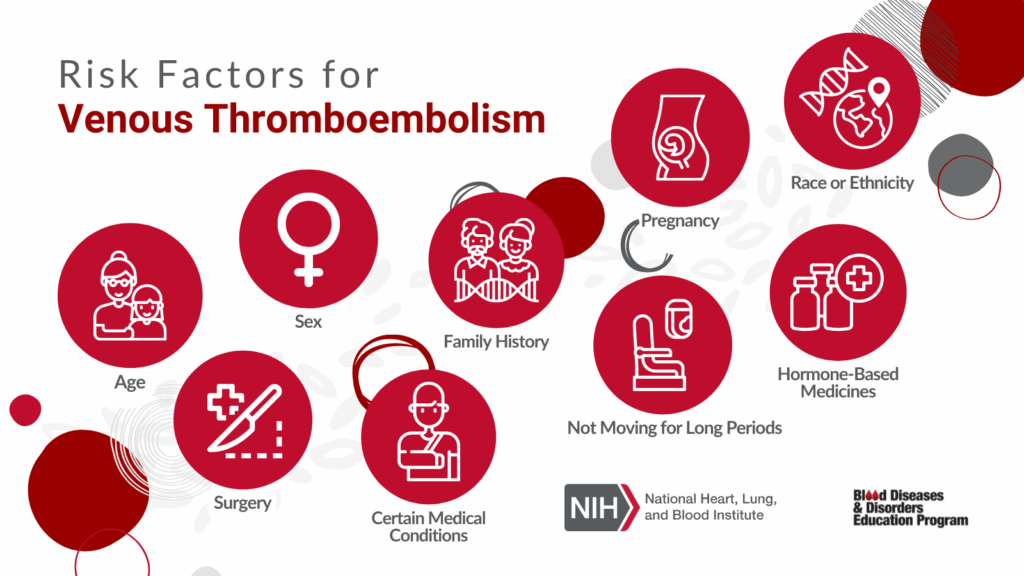
Common Risk Factors for Blood Clots

  • •Hospitalization for illness or surgery
  • •Major surgery, especially involving the pelvis, abdomen, hip, or knee
  • •Hip or knee replacement surgery
  • •Severe trauma, such as a car accident
  • •Injury to a vein caused by a broken bone or severe muscle injury
  • •Cancer and certain cancer treatments
  • •Use of estrogen-containing birth control (pill, patch, or ring)
  • •Pregnancy and the first three months after childbirth
  • •Hormone therapy that contains estrogen
  • •Family history of blood clots or clotting disorders
  • •Being overweight or obese
  • •Prolonged immobility (bed rest or wheelchair use)
  • •Sitting for long periods, especially without movement
  • •Smoking or vaping
  • •Age 55 or older
  • •Chronic conditions such as heart disease, lung disease, or diabetes

Talk With Your Healthcare Provider

If any of these risk factors apply to you, talk with your doctor or healthcare provider. Understanding your risk can help guide prevention, early detection, and life-saving treatment.

Genetic Risk Factors for Blood Clots (Inherited Thrombophilia)

Some individuals are born with genetic conditions that make their blood more likely to clot. These inherited risk factors may remain undiagnosed until a clot occurs—sometimes suddenly and without warning.

Most Common Genetic Risk Factors

  • Factor V Leiden Mutation
    The most common inherited clotting disorder. It makes blood more resistant to natural clot breakdown, increasing the risk of DVT and PE.
  • Prothrombin Gene Mutation (Factor II, G20210A)
    Causes the body to produce excess prothrombin, a clotting protein, increasing the likelihood of clot formation.

Protein Deficiencies (Natural Anticoagulants)

  • Protein C Deficiency
    Reduces the body’s ability to prevent excessive clotting.
  • Protein S Deficiency
    Often inherited and can significantly increase clot risk, especially when combined with other factors.
  • Antithrombin (AT III) Deficiency
    A rare but high-risk condition that greatly increases the chance of dangerous blood clots.

Less Common or Emerging Genetic Factors

  • Elevated Factor VIII Levels
    Can be inherited and associated with increased clotting tendency.
  • Dysfibrinogenemia
    A rare condition affecting how fibrinogen functions during clot formation.
  • Plasminogen Deficiency
    Impairs the body’s ability to break down clots once they form.

Inherited Hypercoagulable States

  • Combined Genetic Mutations
    Having more than one genetic clotting mutation significantly raises risk.
  • Family History of Blood Clots
    Even without a known mutation, a strong family history suggests inherited risk.

Important Considerations

  • Many people with genetic risk factors never experience symptoms until a triggering event occurs (injury, illness, travel, dehydration, hormones).
  • Genetic risk can affect children, teens, and young healthy individuals.
  • Testing is often recommended after an unexplained clot or when there is a family history.