
Small actions can save lives—including yours.
Blood clots are not always caused by lifestyle or temporary medical conditions. For many individuals, genetics play a critical and often hidden role in determining how the body forms and regulates blood clots.
Inherited clotting disorders—known as thrombophilias—are passed down through families and can significantly increase the likelihood of developing abnormal blood clots in veins or arteries. These conditions often affect the body’s natural balance between clot formation and clot prevention.
What makes genetic risk especially concerning is that many individuals have no symptoms and may be unaware they carry a clotting disorder—until a serious event occurs, such as a deep vein thrombosis (DVT) or pulmonary embolism (PE).
Genetics alone do not always cause blood clots. In many cases, risk becomes significantly higher when a genetic predisposition is combined with a triggering event.
Common triggers include:
i.
ii.
iii.
iv.
v.
Most clotting events occur when genetic risk and environmental factors intersect—making awareness of both essential.
Because these conditions often go unnoticed, certain patterns may signal the need for further evaluation:
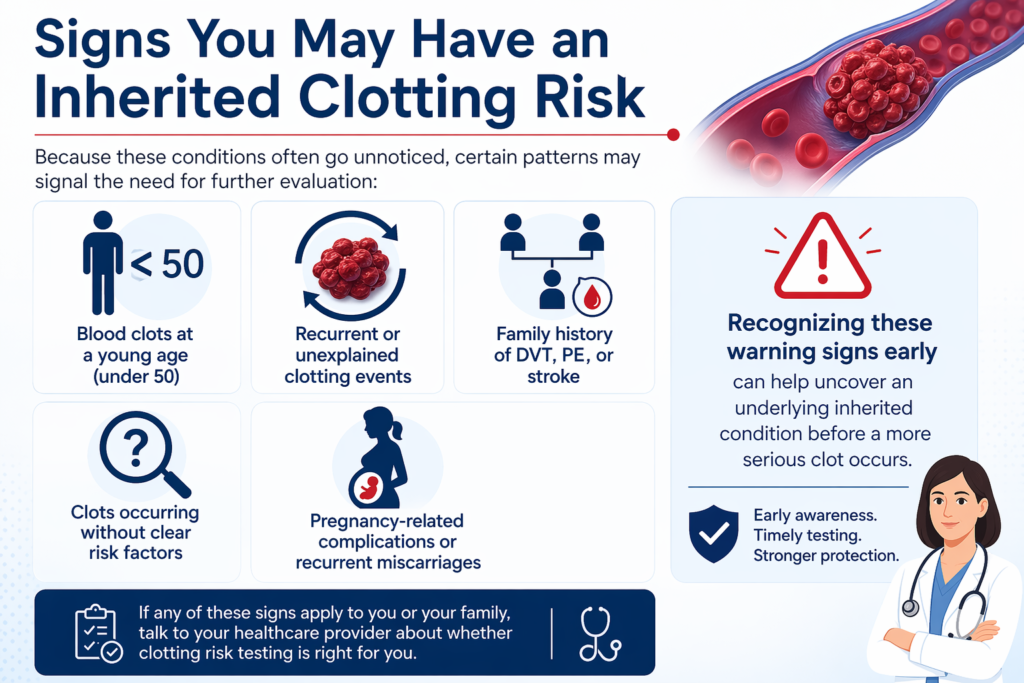
Recognizing these warning signs early can help uncover an underlying inherited condition before a more serious event occurs.
Understanding your genetic risk can be life-saving. Early awareness allows for:
Reduced risk of recurrent clotting events
For families with a history of clotting disorders, early detection provides an opportunity to protect future generations.
If you have a known or suspected genetic clotting condition, prevention focuses on reducing triggers and supporting healthy circulation:
01.
02.
03.
04.
04.
Ongoing medical guidance is essential to safely manage inherited risk.


A common misconception is that blood clots only affect older adults. In reality:
01.
02.
03.
This is why education, awareness, and early risk identification are critical—especially for teens, young adults, and families.