Small actions can save lives—including yours.

Stay Active. Stay Hydrated. Prevent Blood Clots.

Genetic Conditions That Increase Blood Clot Risk

Understanding the Genetic Link to Blood Clots

Blood clots are not always caused by lifestyle or temporary medical conditions. For many individuals, genetics play a critical and often hidden role in determining how the body forms and regulates blood clots.

Inherited clotting disorders—known as thrombophilias—are passed down through families and can significantly increase the likelihood of developing abnormal blood clots in veins or arteries. These conditions often affect the body’s natural balance between clot formation and clot prevention.

What makes genetic risk especially concerning is that many individuals have no symptoms and may be unaware they carry a clotting disorder—until a serious event occurs, such as a deep vein thrombosis (DVT) or pulmonary embolism (PE).
Common Genetic Conditions Linked to Blood Clots

Factor V Leiden Mutation

  • The most common inherited clotting disorder
  • Causes resistance to the body’s natural anticoagulant processes
  • Significantly increases risk of DVT and PE
  • More commonly found in individuals of European descent

Prothrombin Gene Mutation (G20210A)

  • Leads to increased levels of clotting protein in the blood
  • Raises the likelihood of abnormal clot formation
  • Often discovered after a first clotting event

Protein C Deficiency

  • Protein C helps regulate and prevent excessive clotting
  • Low levels can result in recurrent or early-onset clots
  • May first appear in adolescence or early adulthood

Protein S Deficiency

  • A rare but serious condition
  • Reduces the body’s ability to naturally prevent clots
  • Associated with a higher risk of recurrent and potentially severe clotting events

Antithrombin Deficiency

  • A rare but serious condition
  • Reduces the body’s ability to naturally prevent clots
  • Associated with a higher risk of recurrent and potentially severe clotting events

When Do Genetic Factors Become Important?

Genetics alone do not always cause blood clots. In many cases, risk becomes significantly higher when a genetic predisposition is combined with a triggering event.

Common triggers include:

  • i.

    Surgery or hospitalization
  • ii.

    Long periods of inactivity (travel, bed rest)
  • iii.

    Pregnancy and the postpartum period
  • iv.

    Cancer or chronic illness
  • v.

    Hormonal medications (birth control or hormone therapy)

Most clotting events occur when genetic risk and environmental factors intersect—making awareness of both essential.
Signs You May Have an Inherited Clotting Risk

Because these conditions often go unnoticed, certain patterns may signal the need for further evaluation:
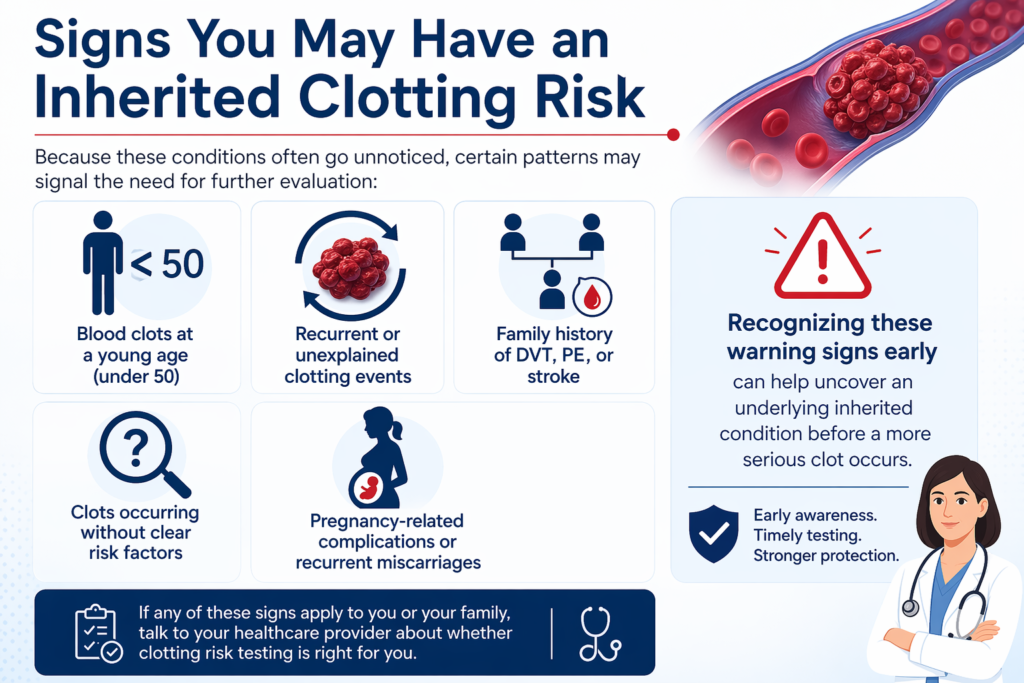
Blood clots at a young age (under 50)

Recurrent or unexplained clotting events

Family history of DVT, PE, or stroke

Clots occurring without clear risk factors

Pregnancy-related complications or recurrent miscarriages

Recognizing these warning signs early can help uncover an underlying inherited condition before a more serious event occurs.

How Genetic Testing for Blood Clots Works

Genetic testing is typically done through a simple blood test or DNA analysis, often ordered by a healthcare provider.

What testing can reveal:

  • Have a family history of blood clots
  • Inherited deficiencies affecting clot regulation
  • An individual’s overall genetic risk profile

What testing cannot do:

  • Guarantee that a clot will occur
  • Predict exactly when or if a clot will develop
  • Replace medical evaluation or clinical judgment
Genetic testing is most effective when combined with personal history, family history, and physician guidance.

Why Early Detection Matters

Understanding your genetic risk can be life-saving. Early awareness allows for:

I.

Proactive prevention strategies

II.

Faster recognition of warning signs

III.

Personalized care during high-risk situations

IV.

Reduced risk of recurrent clotting events

For families with a history of clotting disorders, early detection provides an opportunity to protect future generations.

Prevention for Those with Genetic Risk

If you have a known or suspected genetic clotting condition, prevention focuses on reducing triggers and supporting healthy circulation:

  • 01.

    Stay active and avoid prolonged immobility
  • 02.

    Maintain proper hydration, especially during travel
  • 03.

    Use preventive anticoagulation when prescribed
  • 04.

    Wear compression garments when recommended
  • 04.

    Inform healthcare providers before surgery or medical procedures

Ongoing medical guidance is essential to safely manage inherited risk.

Blood Clots Can Affect Young, Healthy Individuals

A common misconception is that blood clots only affect older adults. In reality:

  • 01.

    Genetic clotting disorders often appear in young people
  • 02.

    Athletes and highly active individuals are not immune
  • 03.

    Many cases occur without obvious warning signs

This is why education, awareness, and early risk identification are critical—especially for teens, young adults, and families.

Help us spread awareness

Grace’s legacy lives on through every person who learns the signs and shares the knowledge. Together, we can prevent tragedy.