
Movement is one of the simplest and most effective tools we have to reduce the risk of blood clots—and yet it is often overlooked. When the body remains still for long periods, blood flow slows, especially in the legs. Slow or stagnant blood is more likely to clot.
Long school days, desk jobs, screen time, travel, recovery from illness, and even emotional withdrawal during stress or grief can all reduce movement. Children and teens are not immune. Hours spent sitting in classrooms, gaming, studying, or traveling can quietly increase clot risk, particularly when combined with dehydration or illness.
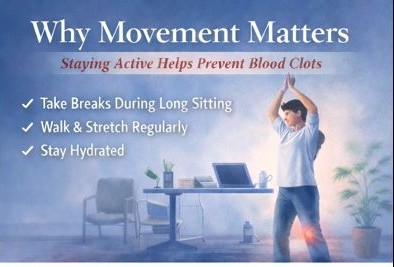
Movement does not need to be intense to be protective. Standing up regularly, stretching, walking, flexing the calves, and changing positions throughout the day help keep blood circulating. Hydration works alongside movement by keeping blood less viscous and easier to flow.
For families, encouraging movement can be framed as self-care rather than exercise. Taking breaks, going for short walks, and making movement part of daily routines can have a powerful impact. During long trips or sedentary days, even small movements matter.
Circulation is life. Movement is medicine. And prevention often begins with the simplest steps.