
Pulmonary embolism (PE) is one of the most dangerous and misunderstood medical emergencies. It occurs when a blood clot—most commonly formed in the deep veins of the legs—breaks loose and travels to the lungs, blocking blood flow. When this happens, oxygen levels drop, the heart is placed under extreme strain, and the body can shut down quickly.
What makes pulmonary embolism especially devastating is how often it goes unrecognized. Symptoms can vary widely and may include shortness of breath, chest pain, rapid or irregular heartbeat, dizziness, coughing (sometimes with blood), nausea, anxiety, or sudden collapse. In some cases, symptoms are mild or mistaken for stress, asthma, muscle strain, or a viral illness. In others, the first symptom is sudden death.
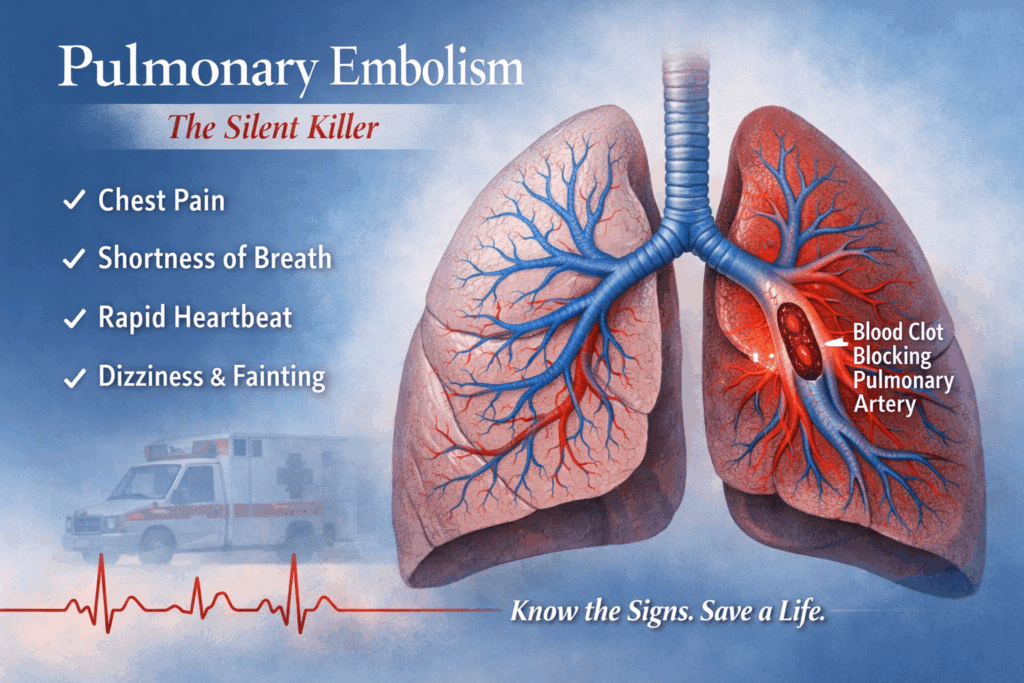
Pulmonary embolism does not only affect older adults or those with obvious medical conditions. Children, teens, and young adults can and do experience PE—sometimes without any known risk factors. Genetic clotting disorders, dehydration, recent illness, long periods of sitting, certain medications, inflammation, and hormonal changes can all increase risk. Often, multiple small factors combine in ways that are invisible until it is too late.
PE is a leading cause of preventable death. Awareness is not about fear—it is about recognition. Knowing the symptoms, trusting your instincts, and seeking urgent medical care when something feels wrong can save a life. Asking the right questions and advocating for proper testing matters.
At the heart of this foundation is a simple truth: more awareness means more lives saved. Pulmonary embolism should never be silent.