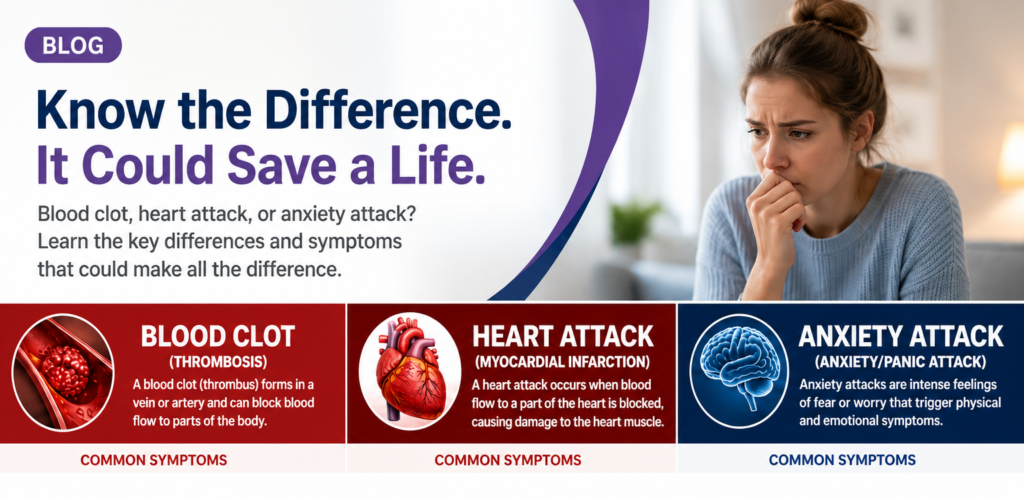
Chest pain. Shortness of breath. A racing heart.
These symptoms are commonly associated with a heart attack or a panic attack—but they can also be signs of a pulmonary embolism (PE), a life-threatening blood clot in the lungs. Unfortunately, pulmonary embolisms are sometimes misdiagnosed, delaying the treatment that can save a life.
A pulmonary embolism occurs when a blood clot—often originating in the deep veins of the legs (deep vein thrombosis or DVT)—travels to the lungs and blocks blood flow. Because its symptoms overlap with other medical conditions, recognizing the warning signs can be challenging.
Similar Symptoms, Different Causes
A pulmonary embolism can cause:
- Sudden shortness of breath
- Sharp or persistent chest pain
- Rapid heartbeat
- Lightheadedness or fainting
- Anxiety or a feeling of impending doom
- Coughing, sometimes with blood
These symptoms can easily resemble those of a heart attack or severe anxiety, especially in younger individuals who are not typically considered at high risk for blood clots.
Why Misdiagnosis Happens
Many people who develop blood clots have no obvious risk factors. While surgery, prolonged immobility, pregnancy, certain medications, or cancer can increase the risk, inherited clotting disorders such as Factor V Leiden or the Prothrombin Gene Mutation may go undetected until a serious event occurs.
When someone is young, active, and otherwise healthy, healthcare providers may initially consider more common explanations like anxiety, muscle strain, or heart-related issues before suspecting a pulmonary embolism. This is why understanding personal and family medical history is so important.
The Importance of Early Recognition
A pulmonary embolism is a medical emergency. When diagnosed quickly, effective treatments such as anticoagulant (blood-thinning) medications can prevent the clot from growing and reduce the risk of additional clots.
If you or someone you know experiences unexplained chest pain, sudden shortness of breath, or other symptoms that seem unusual or severe, seek immediate medical attention. If symptoms persist or worsen despite an initial diagnosis, it is appropriate to ask whether a blood clot has been considered and whether additional evaluation is needed.
Education Can Save Lives
At Grace’s Legacy Foundation, we believe awareness is one of the most powerful tools for preventing tragedy. Our daughter, Grace, appeared healthy, active, and had no known risk factors before a pulmonary embolism unexpectedly took her life. After her passing, genetic testing revealed an inherited clotting disorder that had gone undetected.
By increasing awareness of blood clot symptoms, encouraging conversations about family history, and promoting access to appropriate genetic testing and education, we hope to help others recognize the warning signs earlier.
Knowing the symptoms—and knowing your risk—could make all the difference. Early recognition saves lives.